We use cookies to make your experience better. To comply with the new e-Privacy directive, we need to ask for your consent to set the cookies. Learn more.

Choosing Your First Thermal Imager for Hunting – A Beginner’s Guide
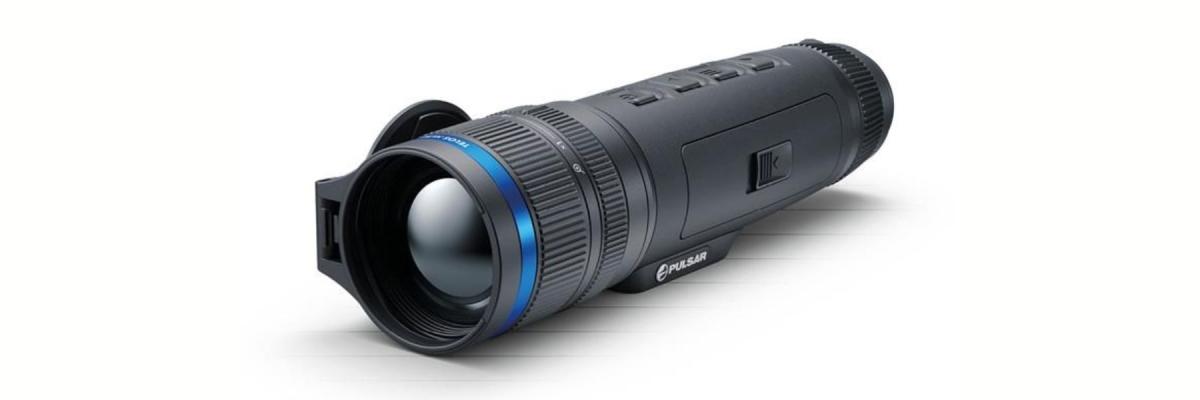
Thermal imagers have gone from being specialist tools used by the military to becoming a regular part of a UK hunter’s arsenal. Whether you’re controlling foxes under the cover of darkness, scanning for deer in dense woodland, or keeping a close eye on livestock safety, thermal technology can give you an additional edge that you’ll be thankful for.
But if you’re a beginner that’s only recently developed a passion for hunting, you might not be aware of what a thermal imager is, the types of devices available, or even what to look for when buying one. With R. Macleod’s beginner’s guide, however, you don’t need to be an expert. We’ll provide everything you need to know so that despite being inexperienced, you can still have a relatively easy time when it comes to choosing your first thermal imager, because at R. Macleod, we’re always proud to welcome new members into the hunting community.
What Is a Thermal Imager?
A thermal imager is a device that detects heat instead of visible light. Every living creature gives off heat, and thermal imagers convert these temperature differences into a visible picture. Unlike night vision, which needs ambient light (like infrared), thermal imagers can work in total darkness and even through mist, light cover, or smoke, making them extremely effective, whether you’re spotting a fox at night on the edge of a field or identifying a deer moving through thick cover at dawn.
Types of Thermal Imagers for Hunting
There are different kinds of thermal imagers, and it’s important to know what they are, as different hunters will have different needs. For instance, the right device for a fox controller working open farmland might not suit a deer stalker covering thick Scottish woodland. Here’s a breakdown of the main categories in order to help you decide where to start.
Handheld Thermal Imagers
Handheld thermal imagers are compact, portable monoculars that let you scan fields, hedgerows, and tree lines for heat signatures. With one in your pocket or hanging on a lanyard, you can quickly sweep the landscape and pick out quarry that your naked eye or binoculars might miss.
For beginners, spotters are brilliant because they’re easy to use, budget-friendly, and versatile. You don’t need to change your shooting setup and can just carry it alongside your rifle and binoculars. Many stalkers use them to locate deer before switching to traditional glass for identification. For fox control, a spotter helps you pick up movement instantly, saving time and effort when scanning large fields.
Thermal Riflescopes
Thermal riflescopes combine detection and aiming into one device. Mounted directly onto your rifle, they allow you to spot, identify, and shoot through thermal imaging alone. This means you can track and take a shot without ever switching optics, which is especially useful for foxing at night. Thermal riflescopes tend to be pricier and heavier than spotters, but they bring extreme efficiency for those who hunt regularly in low light. The better models offer high refresh rates and detailed reticules, helping you make clean, ethical shots even when visibility is low.
Thermal Imager Add-Ons
Thermal imager add-ons are clever devices that attach to your existing daytime scope, transforming it into a thermal riflescope. Their big benefit is flexibility, as you don’t need to swap scopes constantly or invest in two separate optics, giving you the familiarity of your trusted daytime scope combined with the power of thermal imagery.
They can be fitted either on the front of your scope (clip-ons) or on the rear (eyepiece attachments) and are ideal for hunters who want to keep their rig adaptable so they can stalk during the day with traditional optics, then switch to thermal at night.
Thermal Imaging Binoculars
For serious stalkers and professional deer managers, thermal imaging binoculars provide the ultimate scanning experience. With two eyepieces instead of one, they can reduce eye strain and give a more natural viewing experience during long glassing sessions. This makes them invaluable for covering wide ground, such as large estates, forestry blocks, or open moorland.
Key Features to Consider When Buying Your First Thermal Imager
As a beginner, you can get lost in the specifications of thermal imaging devices, but R. Macleod is here to simplify things by providing a list of the key features that you should keep in mind:
-
Resolution
Thermal resolution (measured in pixels) determines how sharp the image is, and higher resolution means more detail. A mid-range resolution, however, is often enough for spotting and recognising quarry like deer or foxes within typical UK hunting distances.
-
Refresh Rate
Refresh rate is how quickly the image updates, measured in Hertz (Hz). A higher refresh rate (50 Hz or 60 Hz) gives smoother motion, which can be crucial when tracking fast-moving quarry like foxes or rabbits.
-
Field of View (FOV)
The field of view is the width of the image you see. A wide FOV is very ideal for woodland stalking or scanning close-range cover, whilst a narrower one suits open farmland or hill stalking.
-
Battery Life and Power Options
Many entry-level devices last around 5–8 hours on a charge, but colder weather can drain power faster. Some models let you hot-swap batteries, whilst others rely on built-in cells.
-
User Interface and Simplicity
As a beginner, you don’t need a device with endless menus. Simple controls and intuitive buttons can mean less time fiddling and more time hunting.
Selecting the Right Device for Your Hunting Style
Choosing the right thermal imaging device doesn’t just mean looking for certain features. It also means factoring in where and how you hunt. Here’s a breakdown of what devices work best for common UK hunting scenarios:
-
Foxing on Farmland at Night
For fox controllers working open fields, a thermal riflescope is often the best choice. It allows you to spot, track, and take a clean shot without shifting optics. For scanning wider areas before setting up, pairing it with a handheld spotter can also be ideal.
-
Woodland Deer Stalking
Deer can be elusive, particularly at dawn and dusk. A handheld spotter can let you scan quietly and efficiently, picking up heat signatures that would otherwise be invisible. Once you locate the deer, you can switch to binoculars for positive identification and assessment before taking the shot with your standard rifle scope.
-
Pest Control on Estates and Farms
Gamekeepers and pest controllers often face long nights covering large areas. Thermal binoculars provide comfort for extended scanning sessions, helping reduce eye strain and offering a natural field of view. For shooting, pairing them with either a thermal riflescope or an add-on can create a complete, professional setup.
-
All-Round Hunting
If you hunt a mix of quarry across different environments, a handheld spotter is the most versatile starting point. It works for foxes, deer, and pest species and is generally the most affordable entry point into thermal technology. You can always add a riflescope or add-on later as your hunting evolves.
R. Macleod’s Wide Selection of Thermal Imagers
At R. Macleod, we understand that choosing your first thermal imager is a big step for beginners. That’s why we stock a large, carefully selected range to suit various hunters, including beginners and seasoned professionals. Here’s a quick glimpse of what we have to offer:
- Handheld thermal imagers: excellent for scanning fields, woodland, and hillsides, our handheld spotters are lightweight, portable, and great for anyone starting out with thermal technology.
- Thermal riflescopes: for fox controllers and night hunters, our riflescopes can provide exceptional clarity and accuracy, combining detection and aiming in one device.
- Thermal imager add-ons: if you already have a daytime scope you’re familiar with, our add-ons let you convert it into a thermal device with ease, offering flexibility and great value.
- Thermal imaging binoculars: our thermal imaging binoculars can deliver brilliant performance, comfort, and depth perception during long scanning sessions.
Browse our website to discover our full stock of thermal imagers. If you need any assistance, feel free to email [email protected] or call 01862 892171. Whether you’re a beginner or a seasoned professional, we strive to supply quality products and offer our valuable expertise.
Final Thoughts
Choosing your first thermal imager doesn’t have to be overwhelming. With our helpful beginner’s guide, you can match the right device to your hunting style, focus on the features that matter, and avoid overcomplicating things with unnecessary specs. By investing wisely, you’ll have a tool that has the potential to transform your time in the field for years to come.
