We use cookies to make your experience better. To comply with the new e-Privacy directive, we need to ask for your consent to set the cookies. Learn more.

Understanding MOA in Red Dot Sights – What It Means and Why It Matters
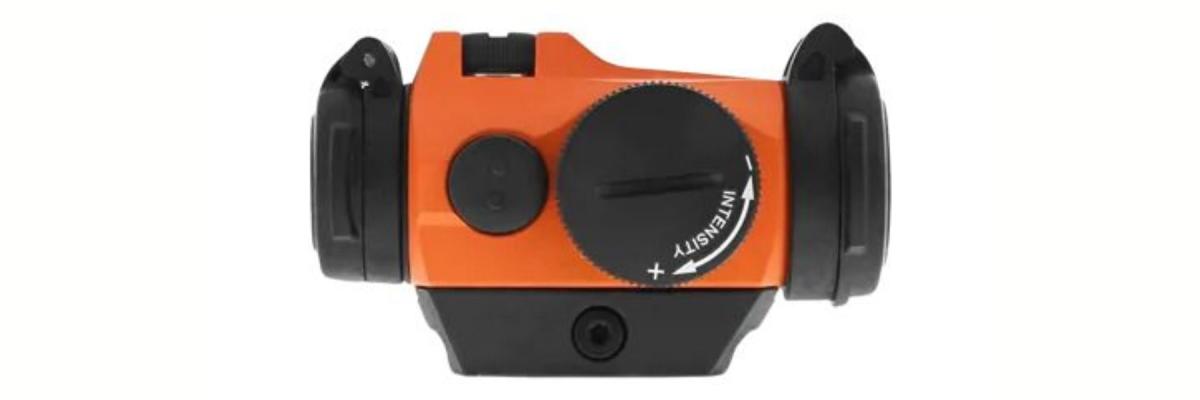
Red dot sights are a popular optic choice among shooters across the UK thanks to the fact that they offer a fast and convenient aiming solution for hunting rifles, shotguns, and even pistols. Not only are they able to fit a wide variety of firearms, but they can also accommodate a diverse array of shooting activities, from pest control to close-quarter firing. But whilst they’re often praised for their benefits, new users might be confused by a technical term called MOA that’s often associated with them. Short for Minute of Angle, MOA is a measurement that directly affects how your red dot performs and how accurately you can shoot with it. It influences everything from how large the dot appears on your target to how you adjust your sight when zeroing at different distances, and understanding this term is important for beginners who want to get the most out of their sights and improve their hunting experience.
At R. Macleod, we offer a huge stock of firearms, accessories, and clothing. Having supplied products for over a century, we’ve developed a strong reputation and a wealth of knowledge that we’d like to share with less experienced hunters so they can improve their skills, build greater confidence, and further enjoy their passion. In order to help you become more familiar with the technical aspects of red dot sights, we’re here to break down what MOA means and explain exactly why it matters.
What Is MOA, and What Does It Mean for Red Dot Sights?
MOA stands for Minute of Angle, and it plays a vital role in how red dot sights function and how they affect your accuracy. In simple terms, it’s a unit of angular measurement that tells you how large the illuminated dot will appear on your target at a given distance. One MOA equates to roughly one inch of coverage at 100 yards. So, if your red dot sight has a 2 MOA dot, the aiming point will cover about two inches of your target when you're shooting at 100 yards.
In red dot sights specifically, MOA is used to describe the size of the red dot itself, rather than the adjustment values, and this measurement helps you understand how much of your target the dot will obscure and how precise your aim can be, especially at different distances. A smaller MOA dot, such as 1 or 2 MOA, is finer and covers less of the target. This makes it ideal for more precise shooting, particularly at medium to long distances. On the other hand, a larger dot, such as 4 MOA, is easier for the eye to pick up quickly, which makes it great for rapid target acquisition in close-range scenarios.
Choosing the Right MOA Dot Size for Your Needs
The size of the red dot you choose depends entirely on your kind of shooting. If your focus is on close-range engagements, perhaps during practical shotgun competitions or driven bird shooting, a larger MOA dot might be the better option. Its size allows your eye to pick it up instantly, even if you’re moving quickly or shooting from awkward positions. On the other hand, if you’re using your red dot where more precision is required, such as controlling small pests at 75 to 100 yards with a .22 rifle, a smaller MOA dot can be much more valuable, allowing you to see more of the target without the dot obscuring the aiming point, helping you to place more accurate shots. For those who like to practise at a variety of distances, there are also variable MOA red dot sights available, which allow you to switch between dot sizes depending on your environment or purpose, though these models tend to be more advanced and expensive.
How MOA Affects Zeroing and Adjustments
Understanding MOA also plays a crucial role when zeroing your red dot sight. Most red dots allow you to adjust windage (horizontal movement) and elevation (vertical movement) in specific MOA increments, often 1 MOA per click, though some models might offer finer adjustments at 0.5 MOA or even 0.25 MOA. When you’re adjusting your red dot sight, each click of the adjustment dial will shift your point of aim by approximately one inch at 100 yards if the sight uses 1 MOA adjustments. If you’re zeroing at a shorter distance, like 50 yards, then that same 1 MOA adjustment would shift your point of impact by half an inch. This not only becomes especially useful when you’re fine-tuning your zero, allowing you to make measured, predictable corrections without guessing or overcorrecting. but also reinforces the importance of understanding how far you're zeroing your red dot. To summarise, knowing how MOA scales with distance lets you apply corrections confidently and make sure that your sight is correctly aligned for your typical shooting distance.
MOA and Target Visibility
Beyond the technical specs, MOA also affects how much of your target you can actually see when you’re aiming. For instance, a 6 MOA dot will cover six inches of your target at 100 yards. That may not seem like much at a glance, but if you’re shooting at a 6-inch gong or a small game animal at that distance, your entire target could be hidden behind the dot. At closer ranges, like 25 yards, that same 6 MOA dot will only cover about 1.5 inches, making it far more usable for rapid shooting without sacrificing too much precision. This balance becomes important when deciding which MOA size suits your usual shooting distances and targets. A larger dot can feel intrusive or imprecise at longer ranges, whilst a very small dot might be difficult to acquire quickly in close-range or low-light situations. Red dots are designed to offer speed and convenience, but choosing the wrong MOA for your intended purpose can limit how effectively you can use the sight.
The Practical Benefits of Understanding MOA
Taking the time to understand how MOA works can significantly improve how you use them in real-world shooting scenarios. Firstly, knowing the size of your red dot in MOA terms allows you to choose a sight that suits your typical shooting distance and target size, meaning the dot doesn’t obscure too much of your view or limit your precision. It also gives you greater confidence when zeroing your sight, as you’ll be able to make accurate adjustments based on distance, knowing exactly how much your point of aim will shift with each click. Rather than relying on trial and error, understanding MOA also means you can approach zeroing in an efficient way, saving both time and ammunition. This knowledge also helps when you're transitioning between different firearms or optics, allowing you to make quicker decisions and better use of your gear. For anyone who wants to shoot more accurately, make smarter equipment choices, and feel more in control of their setup, understanding MOA is not just helpful but essential.
Summary
MOA might seem like a small detail when you're first exploring red dot sights, but it's a term that can make a real difference to your shooting performance. No matter if you're adjusting your zero, deciding on the right dot size, or simply trying to understand how your sight affects your view of the target, knowing how MOA works can give you greater control and confidence. Red dot sights are designed to simplify aiming and speed up target acquisition, but to get the most out of them, it’s essential to understand how dot size translates to real-world use. By learning how MOA influences visibility, precision, and sight adjustments, you’ll be better equipped to choose the right optic, make accurate shots, and improve your results.
High-Performance Red Dot Sights from R. Macleod
If you’re thinking about upgrading your current setup or trying out a red dot sight for the first time, we have a wide selection available here at R. Macleod. We stock a carefully chosen range of high-quality red dot sights from trusted manufacturers such as Aimpoint and Vortex, which are known for their strength, precision, and reliable build quality. No matter if you’re looking for a compact sight for your hunting rifle, something lightweight for fast-paced shotgun shooting, or a rugged optic for general-purpose use, we’re confident that our selection of models can suit a variety of needs and budgets. Our aim is to supply optics that not only enhance your accuracy but also give you the confidence to shoot more efficiently, no matter the conditions. If you’d like to explore the full range, feel free to browse our website or contact us today.
